Location
Loket
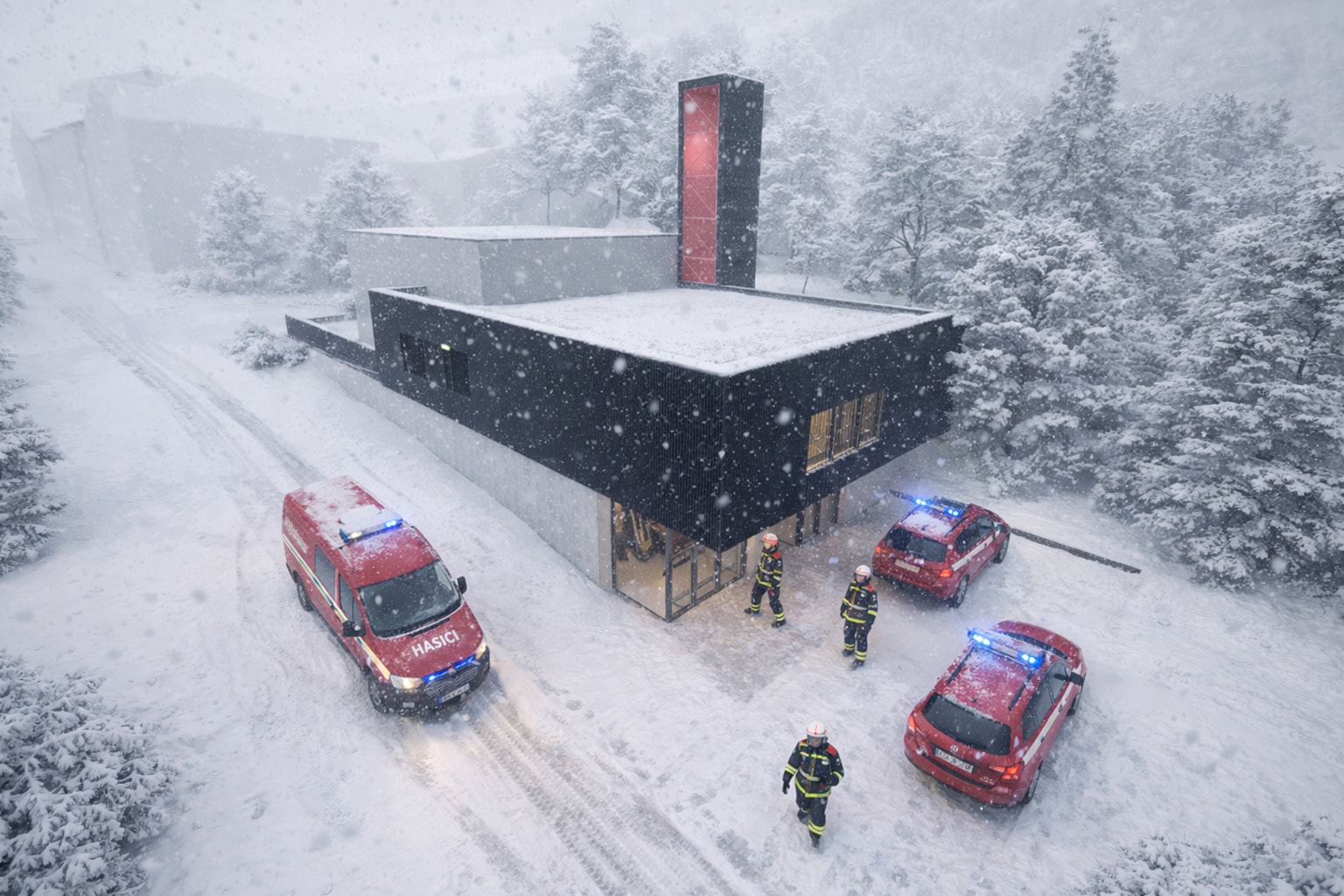
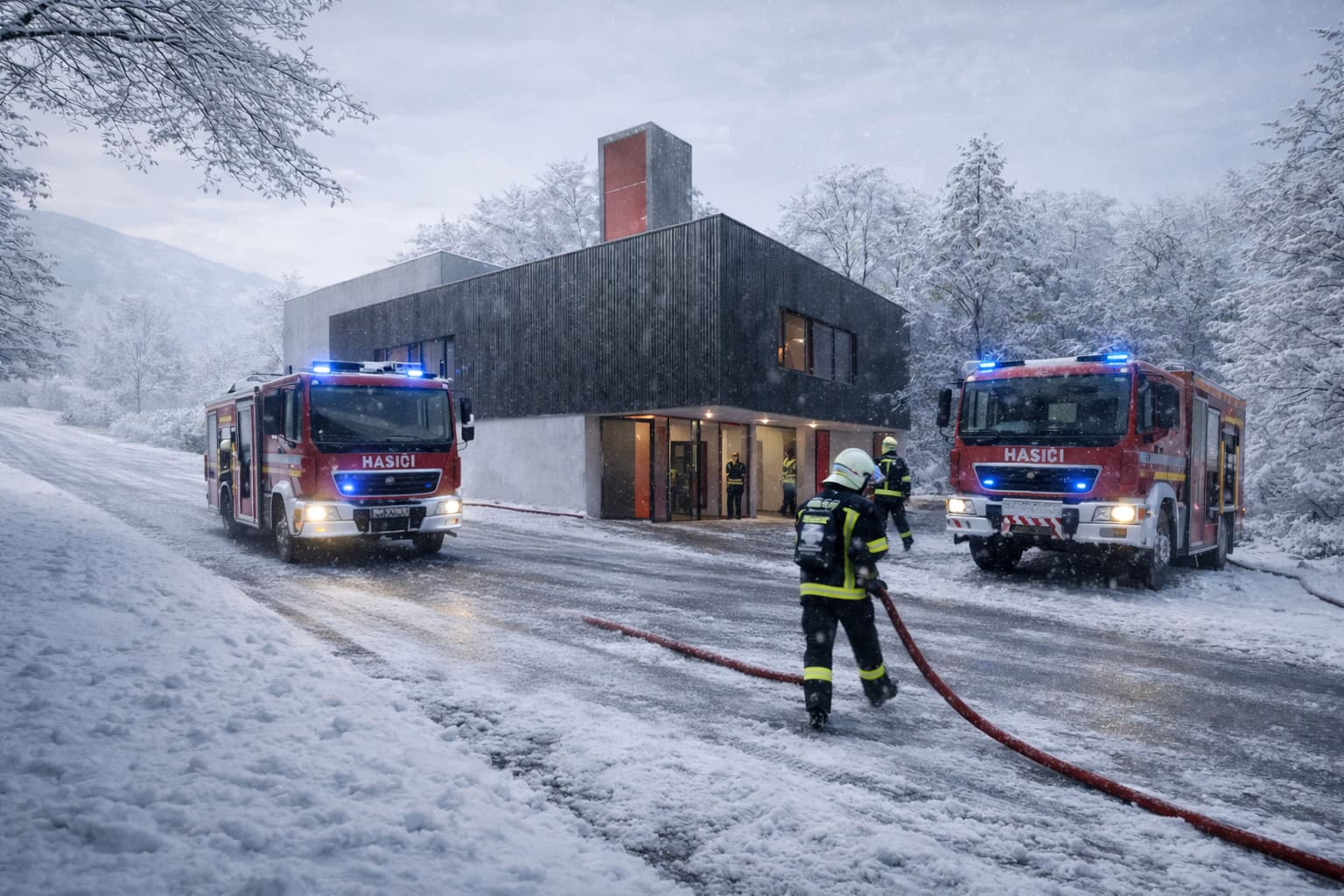
The new fire station is composed of three interconnected parts — the operational facilities, the garage bays, and a distinctive drying tower. These elements not only complement each other functionally, but also form a cohesive architectural composition that responds to the sloping terrain.


The increased building volume required for the fire-fighting equipment is visually concealed behind the more representative clubhouse section. The dominant cantilevered volume is clad in charred timber, a material that contrasts with the exposed concrete used on the remaining parts of the building and clearly distinguishes the social spaces from the utilitarian ones. The façades combine exposed concrete and timber, while the green roof above the operational facilities reinforces the building’s ecological integration into the landscape. The overall appearance of the building responds to contemporary requirements for public architecture — it is durable, functional, and aesthetically restrained, while respecting the scale and character of the site. The overall composition is completed by a hose-drying tower, which emphasizes the importance of the building and, through its red illumination, symbolically signals an ongoing fire brigade intervention.