Location
Ostrava

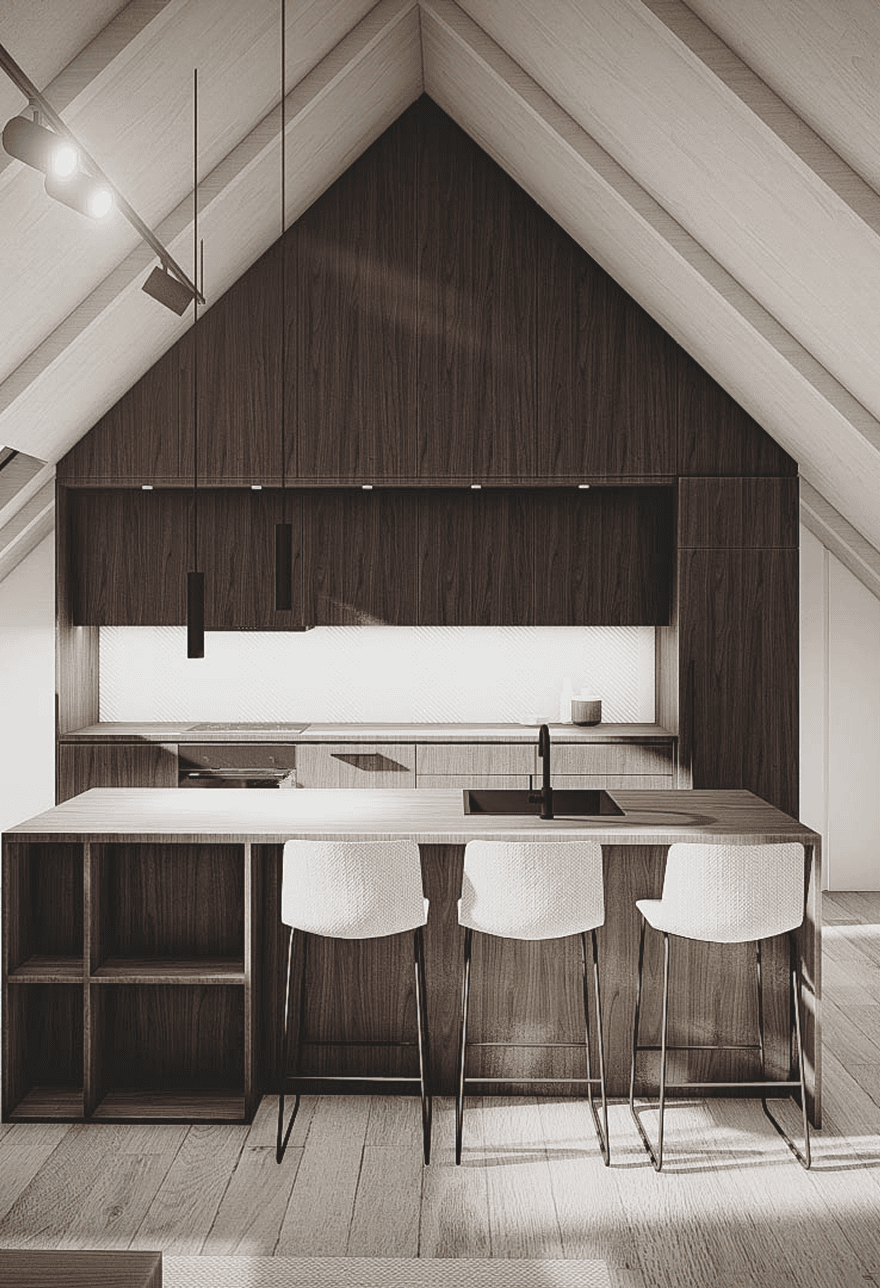
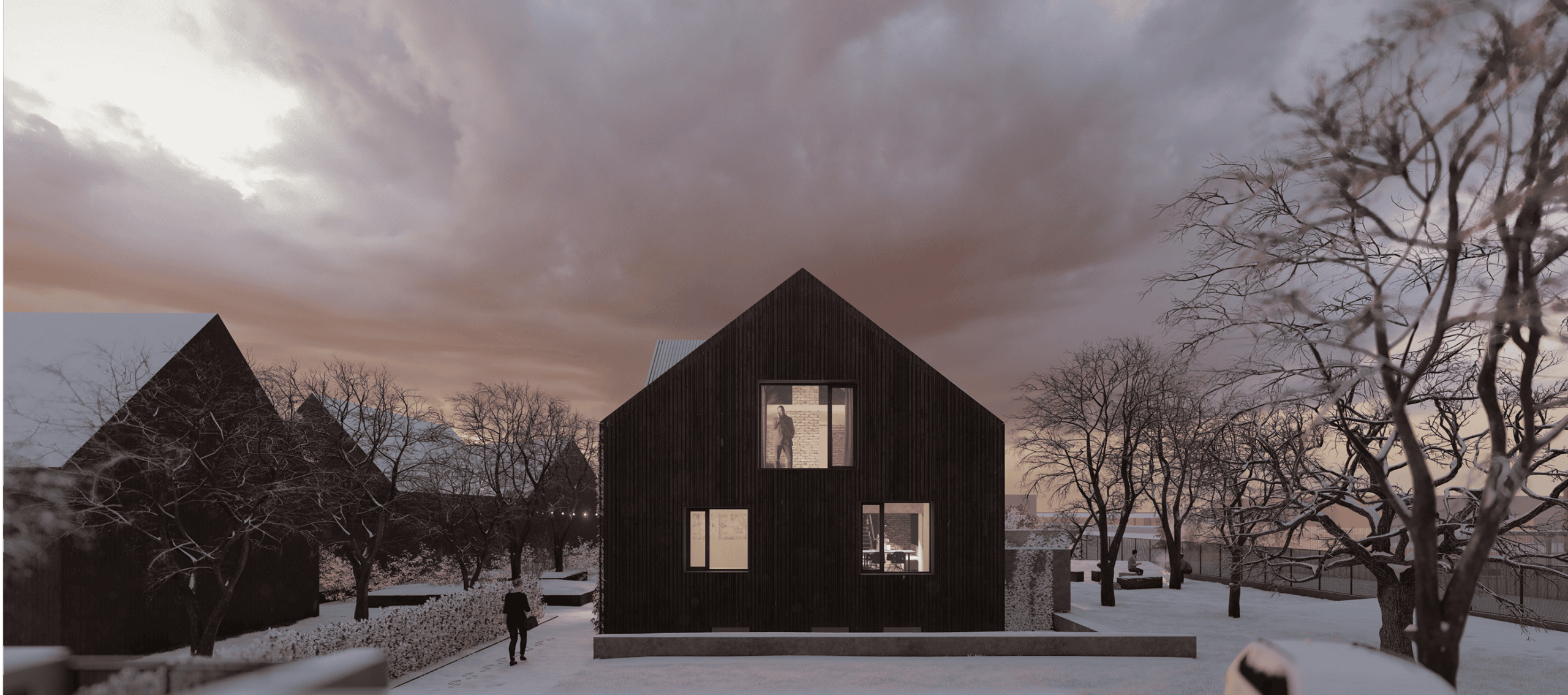
The study explores a concept of co-housing and short-term accommodation in Ostrava–Hrabová, set within a context strongly shaped by its industrial past. The design consciously engages with the site’s raw character, translating it into an architectural expression through dark façades and a restrained material palette.
The primary motif is charred timber, complemented by elements of corten steel and exposed concrete, which together form a durable, contemporary, and contextually grounded whole.
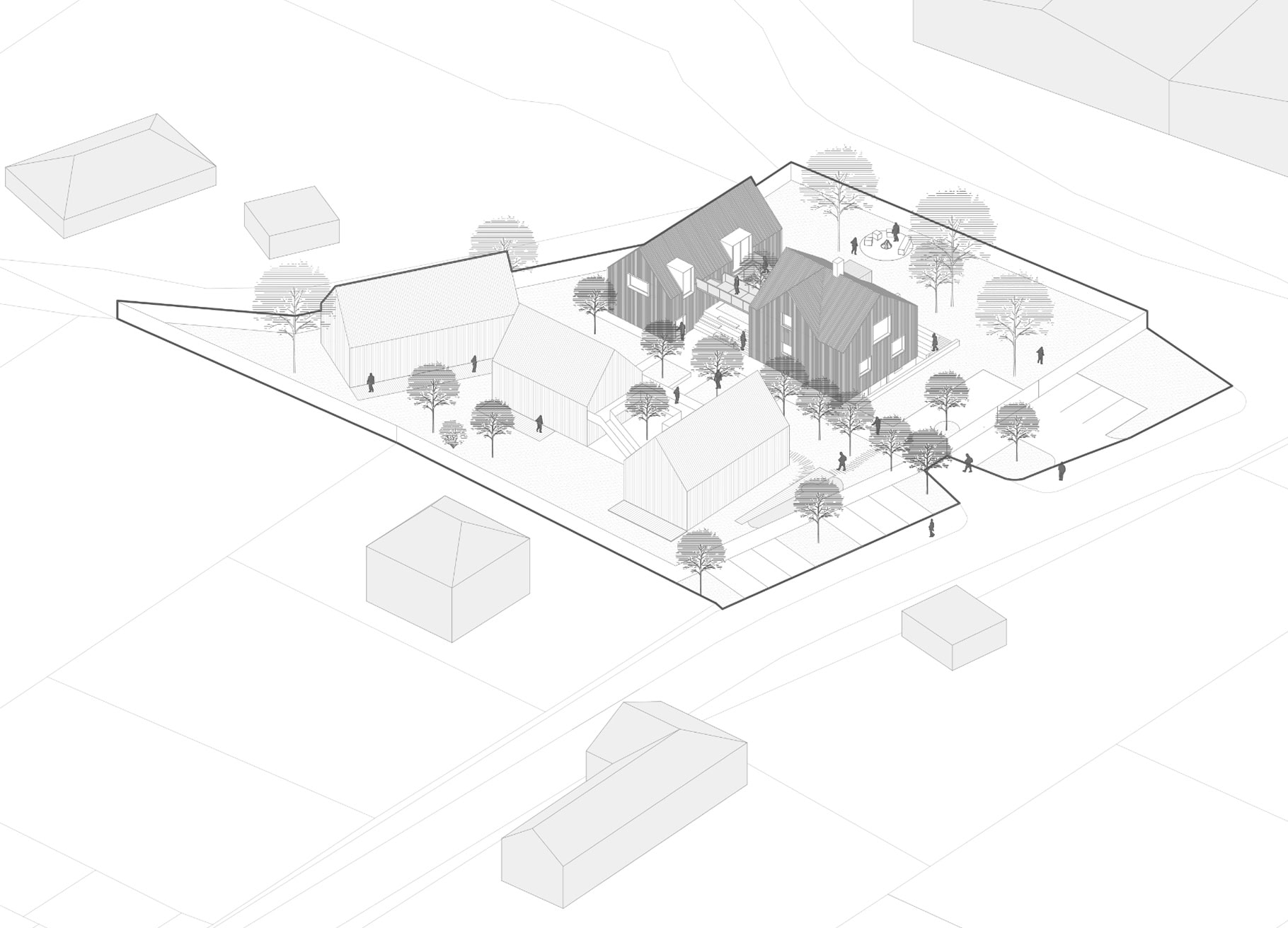
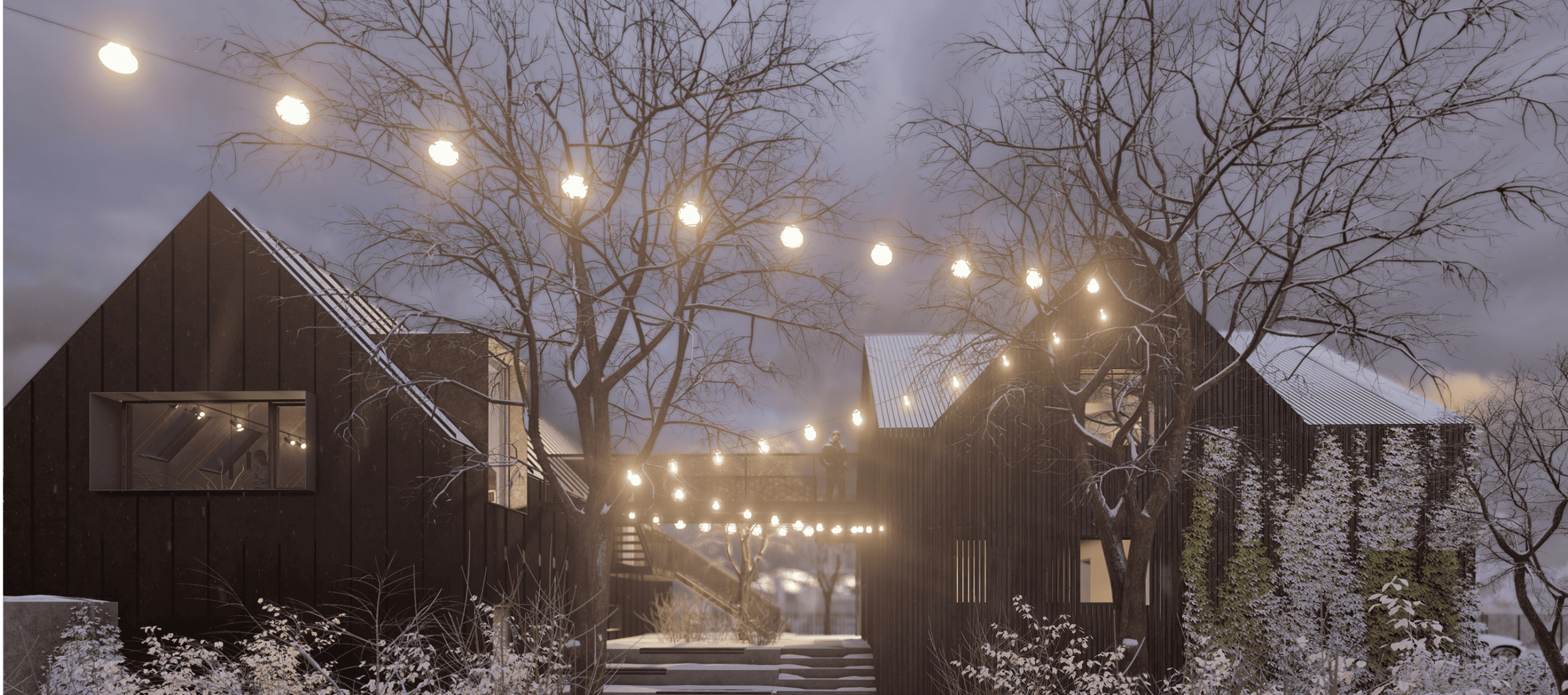
The design consists of two volumes: the reconstruction of an original family house and a new building that expands the accommodation capacity while introducing additional shared spaces to the complex. The two structures are connected by a system of steel staircases and walkways, which function not only as circulation but also as a spatial element — creating visual connections, aiding orientation, and reinforcing the communal character of the housing. The layout is conceived to allow flexible use for both short-term stays and longer-term co-housing, with an emphasis on shared spaces and natural social interaction.
The proposal also includes the design of the surrounding landscape: paved areas for movement and stay, additional greenery softening the industrial character, and a clearly defined outdoor space for shared use — a grill point. The result is a compact complex built on the contrast between the rawness of materials and the livability of the program, transforming the industrial context into an authentic atmosphere for living and hosting.